
Industrial communication networks operate in environments that are often far more demanding than conventional offices or data centers.
Cables may be exposed to:
Standard fiber optic cable can provide high bandwidth and immunity to electromagnetic interference, but its glass fibers still require protection against physical damage. In these environments, armored fiber optic cable can provide an additional mechanical barrier between the optical fibers and surrounding hazards.
However, not every armored cable is suitable for every industrial installation. Armor construction, outer-jacket material, water resistance, fire rating, tensile strength and grounding requirements must all match the intended environment.
This guide explains how armored fiber optic cable works, the main armor constructions, its industrial benefits and the factors to consider before selecting a cable.
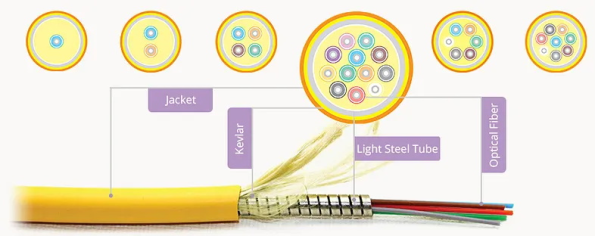
Armored fiber optic cable is an optical cable containing an additional protective layer designed to improve resistance to mechanical damage.
The armor may be made from:
The precise cable construction varies by product.
A typical armored fiber optic cable may include:
The armor does not carry the optical signal. Its purpose is to reduce the likelihood that external forces will reach and damage the fibers.
Depending on its construction, an armored cable may offer increased resistance to:
Armor does not automatically make a cable waterproof, chemical-resistant, flame-retardant or suitable for direct burial.
Those properties depend on additional design elements such as:
The complete cable specification must therefore be reviewed rather than relying only on the word “armored.”
Fiber optic cable already offers several advantages in industrial environments.
The optical fibers themselves do not conduct electrical signals and are unaffected by electromagnetic interference from:
This makes fiber suitable for connecting equipment across electrically noisy areas.
Metallic armor, however, is conductive and may require bonding or grounding according to the installation design and local electrical requirements.
All-dielectric fiber optic cables can provide electrical isolation between network locations.
This may be important when connecting:
When electrical isolation is required, a non-metallic armored cable may be more appropriate than a cable containing steel or aluminum armor.
Fiber supports high data rates over longer distances than conventional balanced copper cabling.
It is commonly used for:
Single-mode fiber can support links extending from hundreds of meters to many kilometers, depending on the optical transceivers.
Multimode fiber is commonly used for shorter links within factories, warehouses and equipment rooms.
Armored cables can be classified by armor construction and installation environment.
Interlocking armor consists of a helically formed metal layer, commonly aluminum or steel.
It provides:
Interlocking armored cable is often used in:
Some products may eliminate the need for separate innerduct or conduit, but this depends on the cable listing and local installation rules.
Corrugated steel tape is wrapped longitudinally around the cable core.
This construction offers:
It is commonly found in:
The steel armor should normally be protected by an appropriate outer jacket to reduce corrosion risk.
Steel wire armor uses steel wires around the cable core and can provide substantial tensile and mechanical strength.
It may be selected for:
Steel wire armored cable is generally heavier and less flexible than lighter armored constructions.
Some small-form-factor armored patch cables and pigtails use a flexible stainless-steel tube around the buffered fiber.
This construction can improve resistance to:
It is commonly used for:
The stainless-steel tube is normally covered by aramid yarn and an outer jacket.
Dielectric armor uses non-metallic reinforcement such as:
Its advantages may include:
Dielectric armored cable is particularly valuable where metallic components are restricted or electrical isolation is required.
| Feature | Metallic Armor | Dielectric Armor |
|---|---|---|
| Common materials | Steel or aluminum | Fiberglass, FRP or aramid |
| Crush resistance | Generally high | Product-dependent |
| Rodent resistance | Generally strong | Product-dependent |
| Electrical conductivity | Conductive | Non-conductive |
| Grounding or bonding | May be required | Usually not required for armor |
| Lightning considerations | Conductive path must be managed | No metallic armor path |
| Weight | Usually heavier | Often lighter |
| Typical applications | Industrial plants, direct burial and exposed routes | Power facilities, substations and electrically isolated links |
Neither construction is universally better. The choice depends on mechanical risk, electrical conditions, installation method and regulatory requirements.
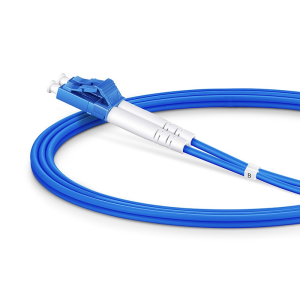
Indoor armored cable is designed for installation inside buildings.
Typical applications include:
Important selection factors include:
An outdoor PE-jacketed cable should not automatically be installed inside a building unless it also meets the applicable indoor fire and smoke requirements.
Outdoor armored cable is designed to withstand environmental exposure.
Depending on the product, it may include:
Outdoor armored cable is commonly used for:
An outdoor rating does not automatically mean the cable is approved for direct burial.
Direct-burial cable is designed to be installed underground without continuous conduit, subject to local requirements and the cable specification.
It normally requires:
Even direct-burial cable may require:
The installation design should follow local codes and project specifications.
The main benefit of armored cable is its increased resistance to physical damage.
This can be useful where cable routes are exposed to:
Reducing physical damage can improve network availability and extend cable service life.
Some armored cable constructions may be installed in pathways where standard cable would require additional conduit or innerduct.
Potential benefits include:
This does not mean armored cable can always replace conduit. Mechanical protection, fire requirements and local installation rules must still be evaluated.
The armor does not increase optical bandwidth, but it protects the fiber that carries the signal.
When correctly selected and installed, armored fiber can support the same optical standards as comparable non-armored fiber, including:
The supported rate and distance depend on the fiber type and transceiver, not on the armor itself.
Rodents can damage conventional cable jackets and expose or break optical fibers.
Metallic armor provides a strong physical barrier. Some dielectric designs also use glass yarns or other materials intended to deter rodents.
No cable should be described as completely rodent-proof unless its manufacturer provides an applicable test specification.
Cable damage can interrupt:
Armored construction reduces one category of failure risk: physical damage to the cable.
Network redundancy, protected routing and preventive maintenance remain necessary for critical systems.
Armored cable often costs more initially than a comparable non-armored cable.
It may nevertheless reduce lifecycle cost by lowering:
The economic benefit is greatest where the cost of a network outage is much higher than the additional cable cost.
Armored fiber is used to connect:
It is particularly useful where cable routes pass near moving equipment or maintenance areas.
Applications include:
All-dielectric armored cable may be preferred near high-voltage equipment where electrical isolation is required.
Oil and gas facilities may expose cables to:
Cable selection must account for chemical-resistant jacket materials, installation-zone requirements and any hazardous-location rules.
Armor alone does not make a cable suitable for a hazardous environment.
Armored fiber is commonly used in:
These installations often require resistance to vibration, moisture and mechanical activity.
Mining networks may require cables with:
Steel wire or other heavy-duty armored constructions may be appropriate depending on the route.
Outdoor and industrial surveillance networks use armored fiber to connect:
Fiber is particularly useful for long-distance camera links and electrically isolated outdoor connections.
Use the following criteria when evaluating a cable.
| Selection Factor | Questions to Confirm |
|---|---|
| Installation environment | Indoor, outdoor, duct, tray, aerial or direct burial? |
| Mechanical risk | Is the cable exposed to crushing, impact, rodents or pulling forces? |
| Armor type | Interlocking, corrugated steel, steel wire, stainless tube or dielectric? |
| Electrical requirements | Is metallic armor acceptable, and must it be bonded or grounded? |
| Fiber type | OS2, OM1, OM2, OM3, OM4 or OM5? |
| Fiber count | How many active and spare fibers are required? |
| Cable construction | Tight-buffered, loose-tube, distribution, breakout or patch cable? |
| Water resistance | Is dry or gel-filled water blocking required? |
| Jacket material | PVC, LSZH, PE or chemical-resistant material? |
| Fire rating | What indoor flame and smoke rating is required? |
| Temperature range | What are the installation and operating temperatures? |
| Tensile strength | What pulling force will occur during installation? |
| Crush resistance | What mechanical loading must the cable withstand? |
| Bend radius | Can the route maintain the specified minimum bend radius? |
| Connector type | LC, SC, FC, ST, MPO/MTP or unterminated? |
| Testing | Are insertion-loss, OTDR or factory test reports required? |
The armor type should be selected independently from the optical fiber category.
Armor improves protection but does not allow unlimited bending.
Exceeding the specified bend radius can cause:
Check both installation and operating bend-radius limits.
Use approved pulling grips and pulling eyes when required.
Do not pull the cable by its connectors or outer jacket unless the product is specifically designed for that method.
Metallic armor may require grounding or bonding.
Requirements depend on:
Incorrect grounding can create safety or interference problems.
Outdoor cable entry points should prevent water from entering:
Drip loops, glands and sealed closures may be required.
Armor reduces risk but should not be treated as permission to route cable through unsafe locations.
Avoid:
Testing may include:
Testing should be performed before and after installation when the project requires documented acceptance.
Armor and water blocking are different features.
A cable may contain steel armor but lack the construction required for prolonged outdoor moisture exposure.
Outdoor cable may be designed only for ducts or protected pathways.
Direct-burial suitability must be confirmed separately.
An outdoor PE jacket may not satisfy indoor fire requirements.
Use an appropriate transition point or a dual-rated cable where required.
Conductive armor can affect electrical safety and building-entry design.
Heavy steel armor may provide strong protection but can be difficult to route through tight spaces.
Even the strongest cable can fail when exposed to excessive pulling, repeated flexing or direct machinery contact.
Armor protects the cable mechanically. It does not reduce optical attenuation or increase bandwidth.
It is better where mechanical protection is required.
In protected indoor conduits or secure equipment rooms, standard non-armored cable may be lighter, more flexible and less expensive.
Yes, when the complete cable is rated for outdoor use.
The armor alone does not provide an outdoor rating.
Only when the product is specifically designed and rated for direct burial.
Not always.
Some armored designs can reduce or eliminate conduit requirements in certain installations, but local codes and project specifications still apply.
It may require bonding or grounding depending on the cable construction and installation.
Follow the manufacturer’s instructions and applicable electrical requirements.
Metal armor provides strong rodent resistance, but “rodent-proof” should be used only when supported by the manufacturer’s test data.
No.
Data speed depends on the optical fiber, transceiver and link design. Armor primarily affects mechanical protection, cable size, weight and installation characteristics.
Yes.
Armored patch cables and pre-terminated assemblies are available with LC, SC, FC, ST, MPO/MTP and other connector types.
Armored fiber optic cable provides an additional layer of mechanical protection for industrial networks exposed to crushing, impact, rodents, vibration and frequent maintenance activity.
Its value is not limited to durability. By reducing the likelihood of physical cable failure, an appropriate armored design can improve network availability and lower long-term maintenance risk.
However, the term “armored” does not automatically mean that a cable is waterproof, outdoor-rated, direct-burial-rated or suitable for indoor fire requirements. The complete construction must be matched to the installation environment.
Before selecting a cable, confirm:
Sunma supplies configurable indoor and outdoor armored fiber optic cables, including OS2 single-mode and OM3/OM4 multimode assemblies. Armor construction, fiber count, connector type, jacket material, cable length and environmental requirements can be customized for manufacturing, utilities, transportation, security and other industrial applications.

 English Home
 简体中文
简体中文 Online Message
 Skype
Skype
 QQ:20181072

